Search engine optimisation has a hierarchy. At the top sits the title — the heavyweight champion of YouTube ranking factors. At the bottom sit the tags — officially "minimal" in impact according to YouTube itself. And somewhere in the middle, overlooked and underappreciated, sits the description. Most creators treat descriptions as an afterthought. A sentence about the video. A link to their Instagram. Maybe a hashtag if they're feeling ambitious. But descriptions are search-indexed metadata. Every word in your description is crawlable by YouTube's search algorithm. More importantly, every word in a translated description is crawlable in that language's search index. A video with a Portuguese description can rank for Portuguese search queries. A video with an Indonesian description can capture Indonesian search traffic. Descriptions are an SEO multiplier hiding in plain sight. Here's how to unlock them.
What YouTube Descriptions Actually Do for SEO
YouTube's search algorithm uses descriptions to understand what your video is about. The title gives the primary topic. The description provides context, detail, and related keywords. Together, they paint a picture the algorithm uses to match your video with search queries.
The first 200 characters of your description appear in search results — the snippet below your title. This is prime real estate. A well-written snippet can be the difference between a click and a scroll-past. But the SEO value extends far beyond those first 200 characters. The full description — up to 5,000 characters — is indexed for search. Every relevant keyword, every related phrase, every timestamped chapter title feeds the algorithm's understanding of your content.
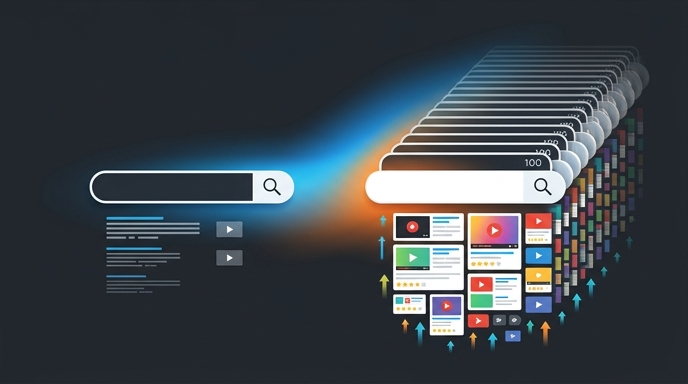
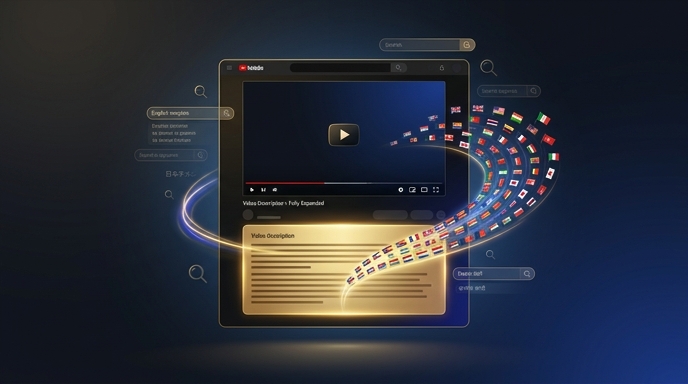
Now multiply that by 100 languages. A video with only a Russian description can match Russian search queries. A video with Russian, Portuguese, Indonesian, Turkish, and 96 more descriptions can match search queries in 100 languages. The content didn't change. The search footprint multiplied by 100. That's not an optimisation. That's a transformation.
Why Most Descriptions Fail Globally
The typical creator description looks something like this: a one-line summary, a few links, and maybe a "subscribe for more" call to action. It's written in one language. It's never updated. It sits there, doing minimal SEO work, while the creator obsesses over the title.
This approach fails globally for one simple reason: search queries are language-specific. A Brazilian viewer searching for "como fazer pão caseiro" will never find your Russian-language description, no matter how perfectly you described your bread-making video. The algorithm isn't translating your description on the fly for search purposes. It's matching Portuguese search queries against Portuguese metadata. If your Portuguese metadata doesn't exist, your video doesn't exist for that search.
Translated descriptions solve this instantly. A Portuguese description containing "como fazer pão caseiro" makes your video eligible for that search query. An Indonesian description with "cara membuat roti" opens Indonesian search traffic. Each translated description is a new entry point. A new search ranking opportunity. A new audience.
How to Structure Descriptions for Translation
Not all descriptions translate well. A description filled with Russian cultural references, slang, or region-specific terms will produce awkward translations. A description structured for clarity and universality will translate cleanly across all 100+ languages.
Here's the template for translation-friendly descriptions:
First 200 Characters: The Global Hook
Lead with a clear, universal summary of your video. Avoid idioms. Avoid cultural references. State plainly what the video is about and why it's worth watching. This section becomes your search snippet in every language. Make it count. "In this video, I show you how to build a budget gaming PC for under $500. Step-by-step guide with part recommendations." Clean. Universal. Translatable.
Middle Section: Keywords and Context
Include 2-3 sentences of additional context. Mention related topics. Use keywords naturally — not stuffed, but present. This is where you give the algorithm more signals about your content. "This build uses the Ryzen 5 processor and GTX 1660 graphics card. Perfect for gaming at 1080p resolution. All parts linked below."
Timestamps: The Universal Language
Timestamps are gold for global audiences. A viewer who doesn't speak your language can still navigate your video using chapter markers. They also provide structured data the algorithm uses for search. Write timestamp labels that translate well. "0:00 Introduction" instead of "0:00 Привет, ребята!" Numbers are universal. Simple labels translate cleanly.
Final Section: Links and Calls to Action
Keep links intact — URLs don't need translation. For calls to action, keep them simple. "Subscribe for more tech reviews" translates cleanly. "Smash that like button if you're part of the squad" does not. Write CTAs that make sense in any language, or let VidLocalizer handle the localisation.
How VidLocalizer Handles Descriptions
VidLocalizer translates your entire description — all 5,000 characters if you use them — into 100+ languages. The translations are localised, not literal. This matters enormously for SEO.
A literal translation of "best budget gaming PC" into Portuguese might not match how Brazilians actually search. Localised translation uses the phrasing that real Portuguese speakers use. The result is a description that reads naturally to a human and matches real search queries. YouTube's algorithm rewards this. Natural language beats keyword-stuffed translation every time.
The tool preserves your formatting. Timestamps stay functional. Links stay clickable. The structure you built in your original description carries through to every translated version. You write once. VidLocalizer distributes globally.
Real SEO Results From Translated Descriptions
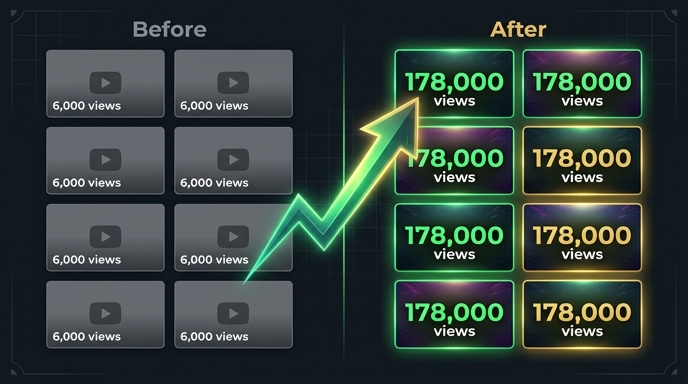
A tutorial channel with 30 videos translated all descriptions into 100+ languages. Before translation, YouTube Search accounted for 22% of their traffic — almost all from Russian queries. Three months after translation, YouTube Search accounted for 41% of traffic. Russian search traffic grew slightly. The real growth came from Portuguese, Spanish, Indonesian, and Turkish search queries. The descriptions made the videos findable in languages where they previously didn't exist.
The creator also noticed longer average watch time from international viewers who found the videos through search. This makes sense: a viewer who searches for a specific topic and finds a video with a matching description is highly likely to watch. The description set accurate expectations. The content delivered. The watch time signal fed back into the algorithm, improving rankings further.
The Description + Title + Subtitle Trifecta
Translated descriptions work best in combination with translated titles and subtitles. Each element reinforces the others. A Portuguese title makes the initial match for a Portuguese search query. The Portuguese description confirms relevance and provides additional keyword context. Portuguese subtitles give the algorithm even more text to index and improve watch time for the Portuguese-speaking viewer who clicks through.
Using only one of these — say, translating titles but not descriptions — leaves SEO potential on the table. The algorithm has less context. The search match is weaker. The trifecta is where the magic happens. Title, description, subtitles. All three translated. All three working together to signal relevance in each language.
Descriptions aren't the flashiest SEO tool. But they might be the most underutilised. While everyone else fights over title keywords in one language, you can own the description space in 100 languages. The gold mine is open. Start digging.
Localize your YouTube channel today
3-day free trial · 80+ languages · cancel any time